
Hedges are traditionally green, living boundary markers which we all enjoy in our gardens and out in the countryside. Hedges are particularly prevalent in West Wiltshire, where our business operates, with dense networks of hedgerows that the CPRE (Campaign to Protect Rural England) Wiltshire says are “the vital stitching in the patchwork of our countryside”.
Hedges aren’t just there to look pretty, which is why we are committed to caring for them all and keeping them fit and flourishing – whether they’re in your back garden, stretching around your far-flung field, or lining the roadside.
Hedges are important because besides enclosing and denoting property boundaries, they offer warmth, protection and a nesting place for insects and wildlife, including butterflies, bats, birds and, of course, hedgehogs. They support crop pollinators, slow down soil erosion and water run-off, and absorb carbon.
Keeping our iconic hedges healthy, happy and in good trim is therefore a responsibility we take seriously here at JB Arborcare, and we have the expertise and equipment to maintain and manage hedges perfectly.
One of the most important tasks involved in keeping your hedges looking good is regular hedge trimming. Cutting back hedges helps keep the boundaries tidy, encourages healthy growth and prevents popular hedging plants like privet, leylandii, yew, beech, hawthorn, hornbeam becoming overgrown or unstable.
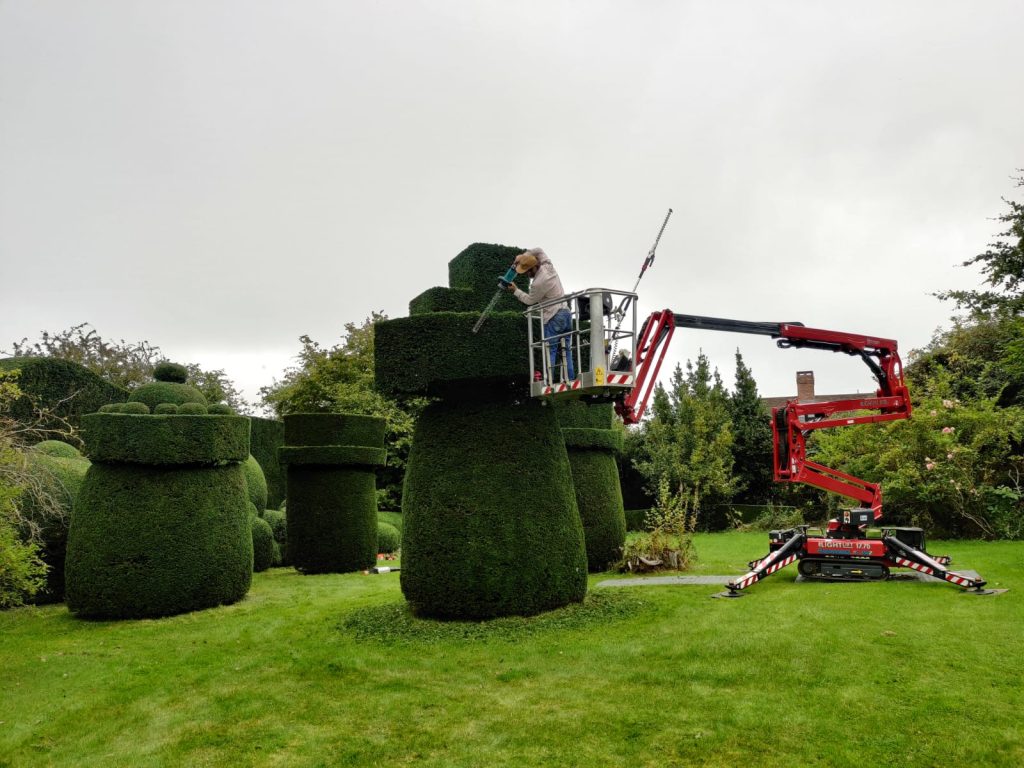
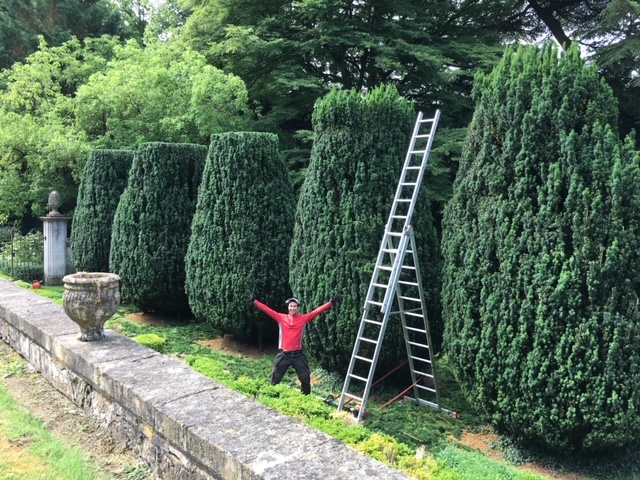
Our hedging team at JB Arborcare are knowledgeable and experienced at keeping hedges of all lengths and heights in shape, whether you want a formal hedge with precise straight lines, shaped with a rounded or pointed top, or a more organic, natural informal hedge. We also prune flowering hedges – cutting away dead and straggly growth to keep up production of flowers or berries.
Timing, frequency and technique is crucial when it comes to trimming or pruning a hedge. It all depends on the species and the desired result or appearance. Fast-growing evergreen hedges like leylandii for example may need cutting two or three times during the growing season, while the slower-growing varieties like yew only need one annual trim.
Hedges are best trimmed in late spring or early autumn, though heavy reductions can be left until late winter when plants are dormant.
You can depend on us to know the best time to keep your hedge in trim. We offer tailored hedge maintenance contracts to suit each individual hedge, or call us for a one-off trim and hedge advice.
Engaging professionals like us to trim and maintain the hedges in your garden, grounds or farmland means you won’t be a risk of falling foul of the law. We are clued up on all the legal considerations that need to be taken into account regarding hedges.
One of the most important regulations is that UK wildlife legislation makes it illegal to intentionally damage or destroy an active bird’s nest. This means that before trimming hedges should be inspected carefully for signs of nesting birds. The main nesting season runs from March to August, but there could be birds nesting at any time of year. We check thoroughly before cutting hedges – not just for birds, but any other wildlife too.
Also key is the question of property boundaries. In most cases a homeowner can trim sections of a hedge growing inside their own boundary, but if branches extend into neighbouring land permission may be required before work can commence. Another issue is the height of hedges. Local authorities can intervene if evergreen or semi-evergreen hedges block out the neighbour’s daylight.
There are some restrictions on hedgework in conservation areas and in proximity to trees under a preservation order. There are also requirements for traffic management for hedgework taking place alongside highways and byways.
All in all, it’s wise to have your hedges cared for by knowledgeable experts like us who have been handling hedges in and around Bradford on Avon and beyond for decades.